
OrderBridge
ລະບົບ Middleware ທີ່ເຊື່ອມຕໍ່ແພລດຟອມ Delivery ເຂົ້າກັບ POS ຂອງຮ້ານອາຫານ - ຕັດຂະບວນການປ້ອນຂໍ້ມູນດ້ວຍມືອອກຢ່າງສົມບູນ.
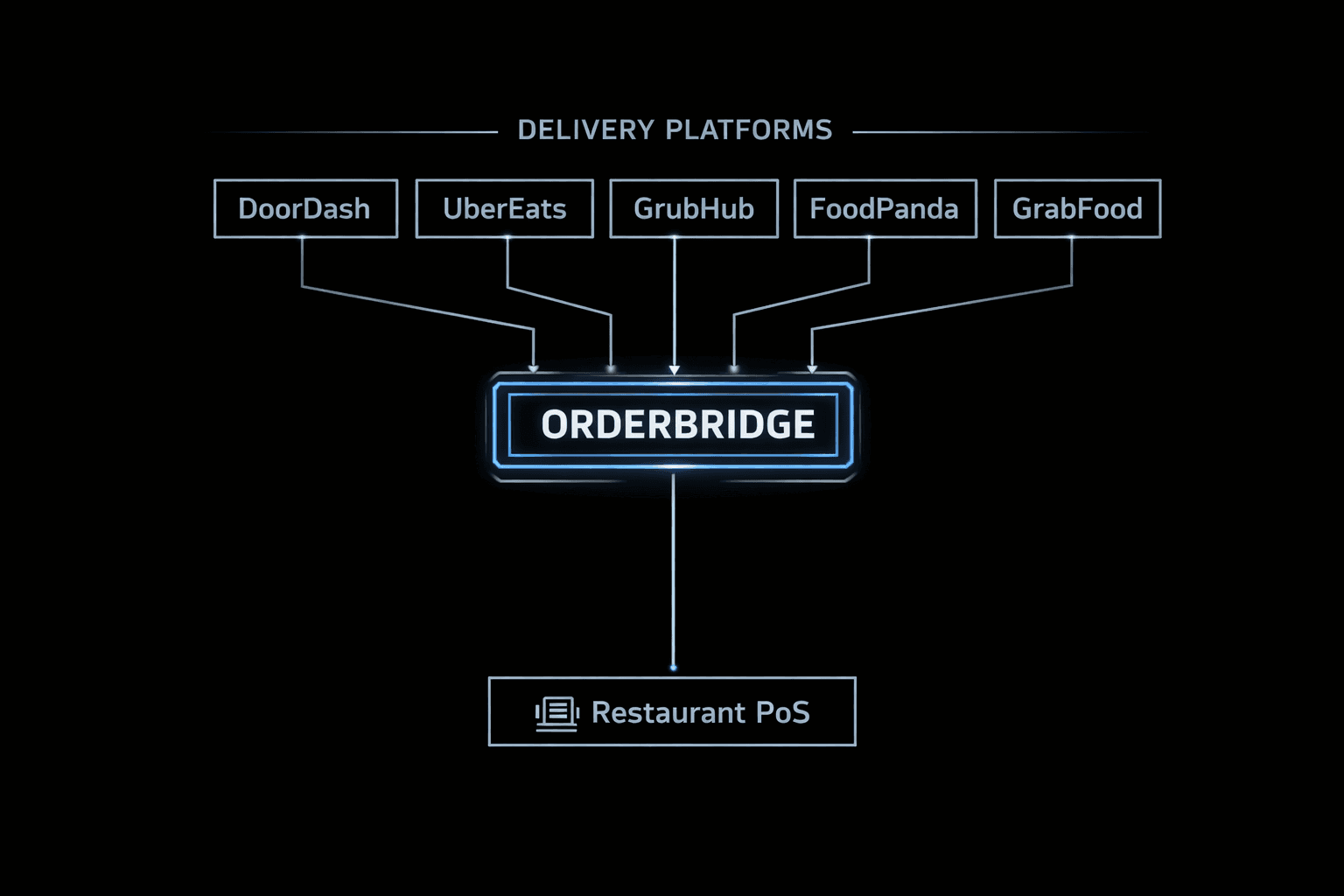
ທຸກໆຄັ້ງທີ່ມີອໍເດີມາຈາກ DoorDash, Uber Eats ຫຼື Grabhub, ພະນັກງານຢູ່ຮ້ານອາຫານຕ້ອງອ່ານຂໍ້ມູນຈາກແທັບເລັດ ແລະ ພິມເຂົ້າ POS ດ້ວຍມື. ຫາກມີ 50 ອໍເດີຕໍ່ມື້, ນັ້ນໝາຍເຖິງການເສຍເວລາໄປກວ່າ 2 ຊົ່ວໂມງ - ໃນທຸກໆມື້.
ການປ້ອນຂໍ້ມູນດ້ວຍມືເຮັດໃຫ້ເກີດຂໍ້ຜິດພາດ. ພາດຕົວເລືອກເພີ່ມເຕີມ, ໃສ່ຈໍານວນຜິດ, ຫຼື ຂ້າມບາງລາຍການ. ໃນເຮືອນຄົວທີ່ຫຍຸ້ງຫຼາຍ, ອໍເດີທີ່ຜິດພາດພຽງອັນດຽວນໍາໄປສູ່ການຮ້ອງຮຽນຈາກລູກຄ້າ, ການຄືນເງິນ ແລະ ອາຫານທີ່ເສຍໄປລ້າໆ.
ການຄິດໄລ່ທາງເສດຖະກິດນັ້ນຊັດເຈນ: ທີ່ 50 ອໍເດີຕໍ່ມື້, ໃຊ້ເວລາ 2.5 ນາທີຕໍ່ອໍເດີ ແລະ ຄ່າແຮງງານ $18/ຊົ່ວໂມງ - ນັ້ນໝາຍເຖິງ ເສຍເງິນໄປກວ່າ $1,100 ທຸກໆເດືອນ ໃຫ້ກັບບັນຫາທີ່ຄວນຈະເຮັດເປັນອັດຕະໂນມັດ.
OrderBridge ເຮັດໜ້າທີ່ເປັນຕົວເຊື່ອມລະຫວ່າງແພລດຟອມ Delivery ແລະ POS. ເມື່ອມີອໍເດີເຂົ້າມາ, ມັນຈະຮັບ Webhook, ແປງຂໍ້ມູນໃຫ້ເປັນຮູບແບບ POS ແລະ ປ້ອນອໍເດີເຂົ້າໄປໂດຍອັດຕະໂນມັດ - ພາຍໃນເວລາບໍ່ຮອດ 800ms ໂດຍບໍ່ຕ້ອງໃຊ້ຄົນເລີຍ.
ການຮັບ Webhook
ແຕ່ລະແພລດຟອມ Delivery ສົ່ງ HTTPS POST ຫາ Webhook endpoint ດຽວກັນ. Server ຈະກວດສອບ HMAC-SHA256 signature, ປະຕິເສດຂໍ້ມູນທີ່ບໍ່ຖືກຕ້ອງທັນທີ ແລະ ກວດສອບອໍເດີທີ່ຊໍ້າກັນດ້ວຍ ID.
ການແປງຂໍ້ມູນ
ຕົວຈັດການສະເພາະຂອງແຕ່ລະແພລດຟອມຈະແປງ Schema ໃຫ້ເປັນຮູບແບບ POS ມາດຕະຖານ. ແຕ່ລະລາຍການຈະຖືກຈັບຄູ່ກັບຕາຕະລາງ MenuMapping ທີ່ເຊື່ອມຕໍ່ ID ຂອງແພລດຟອມກັບ SKU ຂອງ POS.
ການປ້ອນຂໍ້ມູນ
ຂໍ້ມູນທີ່ແປງແລ້ວຈະຖືກ POST ຫາ POS API ພ້ອມລະບົບ Retry ແບບ exponential backoff. ຫາກສໍາເລັດ, ຈະເກັບ ID ຂອງ POS ໄວ້. ຫາກລົ້ມເຫຼວຫຼັງຈາກລອງໃໝ່ຄົບຈໍານວນຄັ້ງ, ອໍເດີຈະຖືກໝາຍວ່າ FAILED ແລະ ແຈ້ງເຕືອນໃຫ້ກວດສອບດ້ວຍມື.
ການຊິງຄ໌ແບບ Real-Time
ທຸກການປ່ຽນແປງສະຖານະຈະຖືກບັນທຶກໃນ PostgreSQL ແລະ ແຈ້ງເຕືອນຜ່ານ WebSocket ຫາທຸກ Dashboard ທີ່ເຊື່ອມຕໍ່ຢູ່ - ບໍ່ມີການ Polling, ບໍ່ຕ້ອງ Refresh ໜ້າເວັບ.
ປະສົບການພັດທະນາທີ່ໄວ, ໃຊ້ React Query ສໍາລັບຈັດການສະຖານະ Server, ບໍ່ຕ້ອງການ SSR ສໍາລັບ Dashboard.
ໃຊ້ຊັບພະຍາກອນໜ້ອຍກວ່າ Express, ມີລະບົບກວດສອບຂໍ້ມູນໃນຕົວ, ຮອງຮັບ TypeScript ໄດ້ດີເລີດ.
ຂໍ້ມູນແບບ Relational ເໝາະສົມກັບ Schema ຂອງອໍເດີ/token/mapping. Prisma ຊ່ວຍໃຫ້ການຈັດການຖານຂໍ້ມູນປອດໄພ ແລະ ມີ Type.
ໃຊ້ WebSocket ແບບ Native - ບໍ່ມີສ່ວນເກີນຂອງ Socket.io ສໍາລັບຊ່ອງທາງການແຈ້ງເຕືອນດຽວ.
ມາດຕະຖານຄວາມປອດໄພສໍາລັບ POS. Token ຖືກເຂົ້າລະຫັດກ່ອນບັນທຶກລົງຖານຂໍ້ມູນ.
ການກວດສອບລາຍເຊັນ Webhook - ປະມວນຜົນສະເພາະຂໍ້ມູນທີ່ມາຈາກແພລດຟອມ Delivery ທີ່ຖືກຕ້ອງເທົ່ານັ້ນ.
ມີບັນຫາການເຊື່ອມຕໍ່ລະບົບທີ່ຄ້າຍກັນນີ້ບໍ?
ຂ້ອຍສ້າງລະບົບອັດຕະໂນມັດ ແລະ ການເຊື່ອມຕໍ່ທີ່ປັບແຕ່ງມາໂດຍສະເພາະ ສໍາລັບທຸລະກິດທີ່ຕ້ອງການຫຼຸດວຽກທີ່ເຮັດດ້ວຍມື. ລາຄາຄົງທີ່, ໂຄ້ດສະອາດ, ສົ່ງມອບໄວ.